
When Recurring Swelling Needs a Closer Look

Angioedema causes sudden swelling beneath the skin, often around the eyes, lips, face, or throat. When episodes keep returning without a clear trigger, the timing of the swelling and the symptoms that occur with it can provide important clues about what may be contributing.

Dr. Khan of Internal Healing & Wellness MD evaluates recurring swelling alongside your health history and possible exposures. The evaluation may also consider whether allergies, histamine, or mast cell activity fit the pattern of your symptoms.
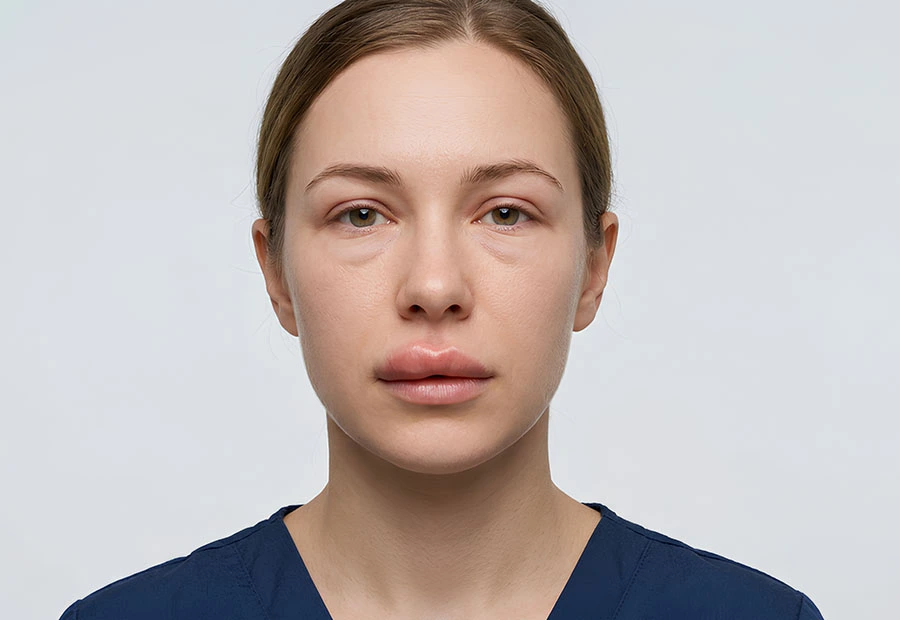
Woman experiencing allergy-related symptoms

Medically reviewed by Imran Khan, MD, IFMCP Last medically reviewed: September 15, 2026

Disclaimer: This content is for informational purposes only and does not replace medical advice, diagnosis, or treatment. Always consult a qualified healthcare provider before making health decisions.

What Is Angioedema?

Angioedema is swelling that develops in the deeper layers of the skin and underlying tissues. Unlike hives, which affect the skin's surface and often itch, angioedema may feel tight, uncomfortable, or burning.

Swelling commonly appears around the lips, eyelids, or face. It can also affect the hands, feet, or tongue. Episodes may occur with hives or on their own and can last from several hours to a few days.

Angioedema does not always affect the airway. However, swelling involving the tongue or throat can interfere with breathing and requires immediate emergency medical care.

Child experiencing allergy-related symptoms

What Can Trigger Angioedema?

Angioedema can follow allergic reactions, certain medications, or food exposures. In other cases, infections, stress, heat, or pressure may coincide with an episode. Some forms are hereditary, while other episodes occur without an obvious trigger.

A recurring pattern can make those possibilities easier to narrow. One person may notice swelling after a specific exposure, while another may experience episodes during periods of illness or other physical stress.

The details surrounding each episode can guide the next step in evaluation. Identifying which causes need closer attention depends on when the swelling began, how long it lasted, and whether hives or other symptoms appeared at the same time.

How Do Allergies, Histamine, and MCAS Relate to Angioedema?

Angioedema can occur during an allergic reaction when histamine and other chemical mediators increase swelling in the tissues. This helps explain why some episodes appear together with hives or other allergy symptoms.

Repeated swelling may also raise questions about mast cell activity when it occurs alongside a broader pattern of reactions. That possibility becomes more relevant when symptoms extend beyond a single isolated episode or involve more than one body system.

Mast Cell Activation Syndrome (MCAS) and angioedema are not the same condition. Angioedema can occur as one manifestation of mast cell-related symptoms in some patients, but swelling alone does not establish MCAS. The surrounding symptom pattern helps determine whether mast cell involvement warrants further evaluation.

Not all angioedema is driven by histamine or mast cell activation. Some forms are associated with bradykinin, including hereditary angioedema and angioedema related to ACE inhibitor medications. Whether hives occur with the swelling and which medications a patient takes can therefore provide important diagnostic clues.

How We Evaluate Recurring or Unexplained Angioedema

An angioedema evaluation looks for patterns that can narrow the possible causes of recurring swelling. At Internal Healing & Wellness MD, Dr. Khan reviews when episodes began, what tends to precede them, and which symptoms occur at the same time.

Your broader health history adds context to those episodes. If the pattern suggests a histamine or mast cell component, those areas may receive closer attention. Food reactivity or digestive health may also be considered when your health history suggests they could be contributing to your symptoms.

These findings help determine whether additional testing or a more focused clinical workup may be useful. Instead of evaluating the swelling in isolation, Dr. Khan can use the history surrounding each episode to decide which contributing factors deserve priority.

If the pattern raises concern for hereditary angioedema, symptoms alone do not confirm the diagnosis. Initial laboratory evaluation commonly includes C1 esterase inhibitor protein level and function and C4 testing. Because some hereditary forms can have normal C1 inhibitor results and require additional evaluation, Dr. Khan may recommend or coordinate an assessment with an allergist or immunologist experienced in diagnosing and managing angioedema.

What May Angioedema Treatment Focus On?

Treatment depends on the suspected cause and severity of the swelling. When avoidable food or environmental triggers are identified, reducing exposure may form part of the plan. A low-histamine approach may be considered when histamine appears to play a role. Medication-related, hereditary, and other bradykinin-mediated forms require cause-specific medical management. When the evaluation points toward digestive health or mast cell activity, those findings may influence which supportive strategies receive greater attention.

Treatment therefore follows the clinical picture rather than a single standard protocol for every patient with swelling.

Personalized functional medicine treatment planning

Frequently Asked Questions

Yes. Angioedema can occur without hives. This distinction can help narrow the possible cause, especially when swelling keeps returning without the itching or raised welts typical of hives.

Recurring angioedema does not always have an obvious trigger. Looking at what happens before each episode and which symptoms appear with the swelling can help identify patterns that deserve further evaluation.

Yes. Certain medications can cause angioedema, including some blood pressure medicines. With ACE inhibitors, swelling can even begin after the medication has been taken for a long time without previous problems.

Yes. Angioedema can affect tissues in the digestive tract and cause abdominal pain, nausea, or vomiting. Repeated unexplained abdominal attacks can be especially relevant when hereditary angioedema is being considered.

Hereditary angioedema may warrant consideration when swelling repeatedly occurs without hives, especially when episodes involve unexplained abdominal pain or there is a family history of similar attacks.

Recurring or unexplained angioedema should be medically evaluated when episodes continue without a clear trigger or become more severe. Swelling of the throat or difficulty breathing requires immediate emergency medical care.

Get Help Understanding Recurring Swelling

Recurring angioedema can be difficult to address when each episode is treated separately, and the trigger remains unclear. A consultation with Dr. Khan focuses on the timing of your swelling, the symptoms that accompany it, and the exposures or health changes that may help explain why it keeps returning.

Internal Healing & Wellness MD serves patients in Houston and The Woodlands who want a more detailed evaluation of recurring or unexplained swelling.

Schedule a consultation to discuss your episodes and determine which areas may need further evaluation.


Schedule an Angioedema Consultation


References:

  • Maurer, M., Magerl, M., Betschel, S., et al. (2022). The international WAO/EAACI guideline for the management of hereditary angioedema—The 2021 revision and update. Allergy, 77(7), 1961–1990. https://doi.org/10.1111/all.15214
  • Brown, T., Gonzalez, J., & Monteleone, C. (2017). Angiotensin-converting enzyme inhibitor-induced angioedema: A review of the literature. Journal of Clinical Hypertension, 19(12), 1377–1382. https://doi.org/10.1111/jch.13097

Start Your Holistic Wellness Journey Today

In search of a functional medicine doctor in The Woodlands? Dr. Khan and his experienced team are at your service, ready to help you make life-changing strides toward your health and wellness goals.

Our Location

Our Location

255 Ed English Dr
Suite A
Shenandoah, TX 77385

Our Schedule

Our Schedule

Monday - Friday : 8 AM – 5 PM

Get In Touch

For functional medicine inquiries, contact our experienced functional medicine doctors. We take a holistic approach to improving health and well-being.