Understand Thyroid Changes With Individualized Medical Care

Fatigue, weight gain, menstrual changes, and difficulty concentrating may point toward thyroid problems in women, but they can also overlap with other health concerns. That is why thyroid care should look beyond symptoms alone.

Internal Healing & Wellness MD combines purposeful thyroid testing, a hormonal and metabolic perspective, and individualized management to build a clearer picture of what may be affecting thyroid function. When additional expertise is needed, care can also be coordinated with the appropriate specialist.
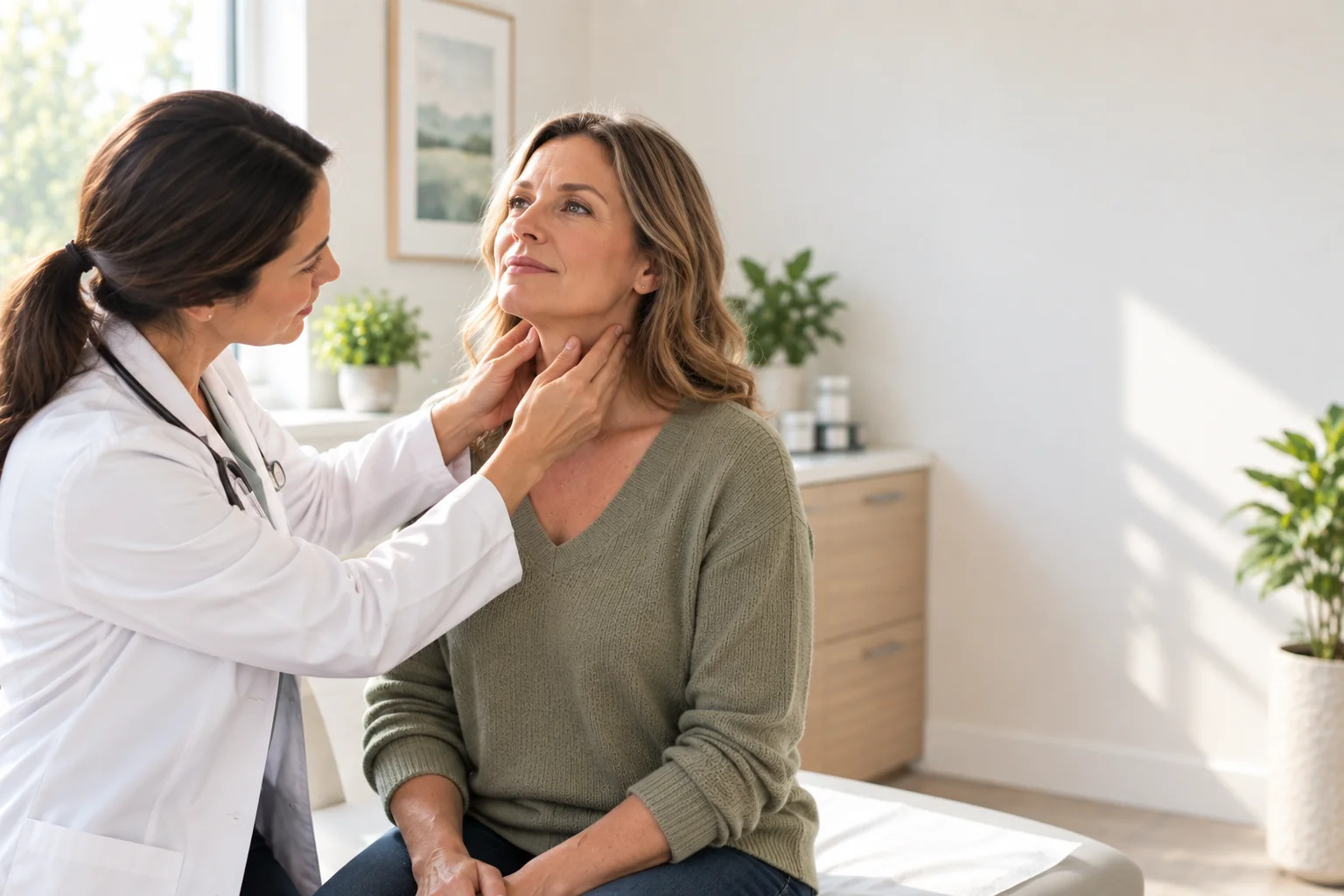
 Physician discussing thyroid and Hashimoto’s disease care with patient.

Disclaimer: This content is for informational purposes only and is not a substitute for medical advice, diagnosis, or treatment. Thyroid evaluation and treatment should be individualized by a qualified healthcare professional.

Medically reviewed by Dr. Imran Khan, MD, ABIM, IFMCP | Last medically reviewed: August 24, 2026

Woman discussing low libido concerns during a medical consultation.

Hashimoto’s Disease and Thyroid Function

Hashimoto’s disease is an autoimmune condition in which the immune system mistakenly attacks the thyroid gland. Over time, this inflammation can affect its ability to produce enough thyroid hormone.

  • Hashimoto’s is not the same as hypothyroidism: It is an autoimmune disease that can eventually cause an underactive thyroid.
  • Changes can be gradual: Thyroid function and thyroid hormone levels may shift as the condition progresses.
  • Monitoring matters: Ongoing assessment can show whether thyroid function remains stable or thyroid treatment needs to be considered or adjusted.

Understanding an Underactive Thyroid

An underactive thyroid, or hypothyroidism, occurs when the thyroid gland does not produce enough thyroid hormone. Hashimoto’s disease is a common cause, but others include:

  • Thyroid surgery or certain treatments
  • Medications that affect thyroid function
  • Thyroiditis, including postpartum thyroiditis

Congenital hypothyroidism is different: it is present from birth rather than developing later in life.

Thyroid Symptoms That Deserve a Closer Look

The symptoms of hypothyroidism can develop gradually and may include:

  • Fatigue or low energy
  • Feeling unusually cold
  • Weight gain or difficulty managing weight
  • Constipation
  • Dry skin or thinning hair
  • Muscle aches or muscle weakness
  • Changes in memory or concentration
  • Menstrual or mood changes
Woman discussing low libido concerns during a medical consultation.

Factors Associated With Thyroid Disease

Relevant risk factors include:

  • Autoimmune history: A personal or family history of thyroid or autoimmune disease.
  • Age and sex: Thyroid disorders are more common in women, with risk increasing with age.
  • Pregnancy: Thyroid changes can occur during pregnancy or afterward.
  • Medical history: Previous thyroid surgery, certain medications, or radiation treatment involving the neck.

Postpartum thyroiditis is a separate condition from Hashimoto’s disease. It occurs within the first year after pregnancy and can temporarily cause an overactive thyroid, an underactive thyroid, or both at different stages.

A Purposeful Approach to Thyroid Testing

Thyroid testing is most useful when it answers a specific clinical question. At Internal Healing & Wellness MD, we consider results alongside symptoms, medical history, medications, and other relevant health factors.

Thyroid Function Testing

Blood tests such as thyroid-stimulating hormone (TSH) and free T4 assess how well the thyroid gland is functioning.

Thyroid Antibody Testing

When Hashimoto’s disease or another autoimmune condition is suspected, thyroid antibody testing may provide additional clinical insight.

Additional Evaluation When Needed

Further testing or imaging is selected based on the findings. An enlarged thyroid, thyroid nodule, or concern for thyroid cancer, for example, requires a different evaluation pathway than an underactive thyroid.

Managing Thyroid Disease With Individualized Care

Treatment should address confirmed thyroid disease while also considering other health factors that may be contributing to how you feel.

Thyroid Hormone Replacement

For a confirmed underactive thyroid, thyroid hormone medicine may be prescribed and adjusted based on follow-up testing and clinical response.

Nutrition & Lifestyle Support

Nutrition, sleep, and movement can support overall health alongside appropriate medical thyroid treatment, rather than replacing it.

Broader Health Support

Hormonal, metabolic, and nutritional concerns are evaluated when relevant, helping distinguish thyroid-related issues from other possible contributors.

Ongoing Monitoring

Once hypothyroidism is treated, follow-up helps assess thyroid hormone levels, response to treatment, and whether adjustments are needed over time.

Where Thyroid and Hormonal Health Connect

Changes in thyroid function can sometimes overlap with broader women’s health concerns, such as:

  • Menstrual health: An underactive or overactive thyroid can contribute to changes in menstrual regularity.
  • Fertility: Thyroid disease may affect ovulation and reproductive health, making thyroid evaluation relevant when fertility concerns arise.
  • Pregnancy and postpartum: Thyroid needs can change during pregnancy, while postpartum thyroiditis can affect thyroid function after delivery.
  • Metabolic health: Thyroid dysfunction can influence metabolism and body weight.
Woman discussing low libido concerns during a medical consultation.

Thyroid Care That Connects the Bigger Picture

Our approach to thyroid disease looks beyond isolated lab values to understand how thyroid health fits within your broader medical picture.

  • Physician-led care: Thyroid findings are evaluated alongside your symptoms and overall health.
  • Purposeful testing: Testing is chosen to answer specific clinical questions, not from a preset package.
  • Connected assessment: Thyroid hormone, metabolic, hormonal, and autoimmune disease factors can be considered together when relevant.
  • Individualized management: Care adapts to your diagnosis, treatment response, and changing health needs.
  • Specialist collaboration: Endocrinology, OB-GYN, or other specialists can be involved when your care requires additional expertise.

Clinical Expertise Behind Thyroid Care

Dr. Imran Khan’s background in internal medicine allows him to consider thyroid disease alongside metabolic, hormonal, and other medical factors that may influence a patient’s health.

  • His approach is informed by clinical practice since 2011, experience at Cleveland Clinic, Baylor St. Luke’s Medical Center, and Memorial Hermann, and advanced IFM education in hormone and cardiometabolic health.
  • As a board-certified internal medicine physician and IFM Certified Practitioner (IFMCP), Dr. Khan brings both conventional medical expertise and a broader clinical perspective to Hashimoto’s disease, underactive thyroid, and related thyroid hormone concerns.

Learn More

Get a Clearer Picture of Your Thyroid Health

When thyroid symptoms are affecting how you feel day to day, clarity matters. A thyroid consultation can help determine whether thyroid function or thyroid hormone levels may be contributing to your concerns and what evaluation or thyroid treatment may be appropriate.

Get a clearer understanding of your thyroid health and a medically informed path forward.

Disclaimer: This content is for informational purposes only and is not a substitute for medical advice, diagnosis, or treatment. Thyroid evaluation and treatment should be individualized by a qualified healthcare professional.

Frequently Asked Questions

Yes. Hashimoto’s disease is an autoimmune disease, and thyroid antibodies may be present before the thyroid gland stops producing enough thyroid hormone. This distinction helps determine whether monitoring or treatment is appropriate now.

Yes. Changes in thyroid hormone levels can affect menstrual and reproductive function. Because these concerns have many possible causes, evaluating thyroid function alongside other hormonal and health factors can provide a clearer picture.

No. Hashimoto’s does not automatically mean thyroid hormone medicine is necessary. Treatment depends on thyroid function, laboratory findings, symptoms, and the overall clinical picture rather than thyroid antibodies alone.

It can contribute. An underactive thyroid may lead to modest weight gain and make weight management more challenging, but body weight is influenced by many factors beyond the thyroid.

Yes. Postpartum thyroiditis can temporarily cause an overactive thyroid, an underactive thyroid, or both at different stages during the first year after pregnancy. Follow-up testing can show whether thyroid function has returned to normal or needs continued care.

References

American Thyroid Association. (n.d.). Congenital hypothyroidism. Retrieved August 24, 2026, from https://www.thyroid.org/congenital-hypothyroidism/

American Thyroid Association. (n.d.). Postpartum thyroiditis. Retrieved August 24, 2026, from https://www.thyroid.org/postpartum-thyroiditis/

Brown, E. D. L., Obeng-Gyasi, B., Hall, J. E., & Shekhar, S. (2023). The thyroid hormone axis and female reproduction. International Journal of Molecular Sciences, 24(12), 9815. https://doi.org/10.3390/ijms24129815

Jonklaas, J. (2026). The complexity of the relationship between thyroid disease and body weight. Nature Reviews Endocrinology, 22(4), 210–222. https://doi.org/10.1038/s41574-025-01190-0

National Institute of Diabetes and Digestive and Kidney Diseases. (n.d.). Hypothyroidism (underactive thyroid). National Institutes of Health. Retrieved August 24, 2026, from https://www.niddk.nih.gov/health-information/endocrine-diseases/hypothyroidism

Parveen, N., Chittawar, S., Khandelwal, D., & Aggarwal, S. (2026). Pragmatic use of thyroid autoantibodies in clinical practice: An update. touchREV Endocrinology, 22(1), 37–44. https://doi.org/10.17925/EE.2026.22.1.3

Wang, L., Zhu, X., Xu, S., Zhou, B., Wu, Y., Li, Z., Zhao, Y., Li, S., Cheng, F., & Zhu, L. (2026). Hashimoto's thyroiditis: From pathogenesis to clinical management. Frontiers in Endocrinology, 17, 1729316. https://doi.org/10.3389/fendo.2026.1729316

Stay Informed on the Latest Health & Wellness Tips

Subscribe to our newsletter and receive regular updates on integrative approaches to health, the latest research, and wellness tips from our experts.

Start your journey to better health today!

Enter your email address below to stay connected:

    Book Your Consultation Today

    During your first 60-minute functional televisit, we will try to figure out what’s causing your current health problems. Contact us today at Internal Healing and Wellness MD in the Houston area and The Woodlands, we will make sure to provide you with a personalized functional medicine-based treatment plan so that you can begin working towards your goal of a better, healthier life.

    Start Your Holistic Wellness Journey Today

    In search of a functional medicine doctor in The Woodlands? Dr. Khan and his experienced team are at your service, ready to help you make life-changing strides toward your health and wellness goals.

    Our Location

    Our Location

    255 Ed English Dr Suite A
    Shenandoah, TX 77385

    Our Schedule

    Our Schedule

    Monday - Friday : 8 AM – 5 PM

    Get In Touch

    For functional medicine inquiries, contact our experienced functional medicine doctors. We take a holistic approach to improving health and well-being.