


Author and Medical Reviewer: Dr. Imran Khan, MD, IFMCP
Last Updated: September 12, 2026
Understanding the E13146 Ivermectin and Balstilimab Study
E13146 is an ongoing Phase I/II study evaluating ivermectin with immune checkpoint therapy in patients with metastatic triple-negative breast cancer (mTNBC). The preliminary findings reported at the 2025 ASCO Annual Meeting specifically involved ivermectin with balstilimab, an anti-PD-1 antibody.
As of September 2026, E13146 remains a recruiting Phase I/II trial, with the current protocol evaluating ivermectin in combination with balstilimab or pembrolizumab. The preliminary results reported in 2025 specifically involved ivermectin in combination with balstilimab.
Medical Disclaimer: This article is for educational purposes only and is not medical advice or a treatment protocol. Ivermectin is not FDA-approved for cancer treatment, and fenbendazole is not FDA-approved for human use. Neither should replace treatment recommended by your oncology team.

What Were the E13146 Results?
At the time of the 2025 report, 9 patients had enrolled and 8 were evaluable for tumor response. Among those eight patients, researchers reported:
- 1 partial response
- 1 case of stable disease
- 6 cases of progressive disease
The study reported a four-month clinical benefit rate of 37.5% (95% CI, 15.3%–91.7%) among the eight evaluable patients. The wide confidence interval reflects the uncertainty of this early finding. Overall survival was still too early to assess at the time of the 2025 report.
Treatment-related adverse events included rash, anemia, diarrhea, altered taste, muscle weakness, hypothyroidism, and vomiting. The investigators reported that the combination was sufficiently tolerated to support continued investigation.
What Do the Early E13146 Results Mean?
The E13146 ivermectin and balstilimab results provide early human data, but they do not establish ivermectin as an effective cancer treatment.
The study population was very small, the findings were preliminary, and ivermectin was given in combination with balstilimab. As a result, the study cannot determine whether ivermectin itself contributed to the observed clinical response. Larger studies are needed to evaluate effectiveness.
Why Was Ivermectin Combined With Balstilimab?
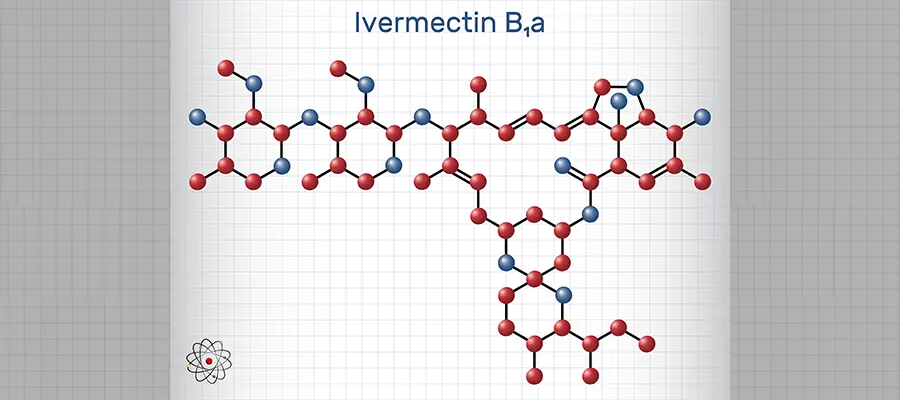
Preclinical research cited in the E13146 study reported increased T-cell infiltration in a mouse model of triple-negative breast cancer. This provided the scientific rationale for studying ivermectin alongside an immune checkpoint therapy.
Balstilimab is an anti-PD-1 antibody. E13146 is investigating whether combining these approaches warrants further study in metastatic triple-negative breast cancer, not whether ivermectin can replace established cancer treatments.
Where Does Fenbendazole Fit Into Current Research?
Fenbendazole is a separate antiparasitic drug being studied for potential anticancer activity. Most available evidence remains preclinical, and a 2024 review published in Anticancer Research identified important gaps in human pharmacokinetics, safety, dosing, and clinical evidence.
Fenbendazole was not studied in E13146. Readers interested in the separate evidence can learn more in our Fenbendazole for Cancer research overview.
What Patients Should Know About Early-Phase Cancer Research

Early-phase research can provide important information, but the findings need to be interpreted within the study design. For E13146, key limitations include:
- Phase I research primarily evaluates safety and dosing.
- Small studies cannot establish treatment effectiveness.
- Conference abstracts provide preliminary rather than definitive evidence.
- A response to a drug combination cannot automatically be attributed to one drug.
- Experimental treatments should not replace established oncology care.
These distinctions are especially important when preliminary findings are discussed without the full context of the study.
How Personalized Cancer Testing May Support Care Discussions
Cancer testing can provide information about tumor characteristics, biomarkers, and circulating tumor cells that may contribute to individualized care discussions. Results should be interpreted alongside a patient's diagnosis, treatment history, and established oncology plan.
IHAWMD offers RGCC Testing, Circulating Tumor Cell Testing, and a Repurposed Drug Assay as part of its personalized approach to cancer care. These tests should not be interpreted as proof that ivermectin or fenbendazole will effectively treat an individual patient's cancer.
Medical Disclaimer: This article is for educational purposes only and is not medical advice or a treatment protocol. Ivermectin is not FDA-approved for cancer treatment, and fenbendazole is not FDA-approved for human use. Discuss experimental or complementary approaches with your treating oncology team.
Discuss Emerging Cancer Research With IHAWMD
If you have questions about emerging cancer research or how experimental findings may relate to your broader care, schedule a consultation with IHAWMD.
Our medical team can help you understand current evidence and its limitations alongside your existing oncology care. Learn more about our personalized cancer care services.
About Dr. Imran Khan
Dr. Imran Khan, MD, IFMCP, has over 15 years of experience in internal medicine and is certified by the Institute for Functional Medicine. He completed his internal medicine residency at Case Western Reserve University and MetroHealth Medical Center. His professional background includes experience at Cleveland Clinic, Baylor St. Luke’s Medical Center, and Memorial Hermann Memorial City.
At Internal Healing and Wellness MD, Dr. Khan helps patients explore personalized and functional approaches alongside their established medical care.
Frequently Asked Questions
E13146 is an ongoing Phase I/II study evaluating ivermectin with immune checkpoint therapy in patients with metastatic triple-negative breast cancer. The current protocol includes ivermectin with balstilimab or pembrolizumab.
At the time of the 2025 report, nine patients had enrolled. Among eight evaluable patients, one had a partial response, one had stable disease, and six had progressive disease.
No. E13146 provides preliminary human data from a small early-phase study and does not establish ivermectin as an effective cancer treatment.
No. E13146 studied ivermectin in combination with balstilimab. Fenbendazole was not part of the reported study.
Yes. As of September 2026, E13146 is ongoing and recruiting participants. The current protocol includes ivermectin with balstilimab or pembrolizumab, while the 2025 preliminary results specifically involved ivermectin with balstilimab.
References
- Yuan Y, Bitar JS, Walker ML, et al. A phase I/II study evaluating the safety and efficacy of ivermectin in combination with balstilimab in patients with metastatic triple negative breast cancer. Journal of Clinical Oncology. 2025;43(16_suppl). doi:10.1200/JCO.2025.43.16_suppl.e13146.
- ClinicalTrials.gov. Ivermectin in Combination With Balstilimab or Pembrolizumab in Patients With Metastatic Triple Negative Breast Cancer. NCT05318469.
- Nguyen J, Nguyen TQ, Han BO, Hoang BX. Oral Fenbendazole for Cancer Therapy in Humans and Animals. Anticancer Research. 2024;44(9):3725–3735. doi:10.21873/anticanres.17197.


